
A commercial building may stand for decades, but the businesses operating inside it can change significantly in just a few years.
Teams grow. Technology evolves. Working patterns shift. Energy costs change. Businesses introduce new systems and employees develop different expectations of their workplace. A commercial property designed only around today’s requirements can therefore become restrictive much sooner than expected.
This is where future-proofing becomes important.
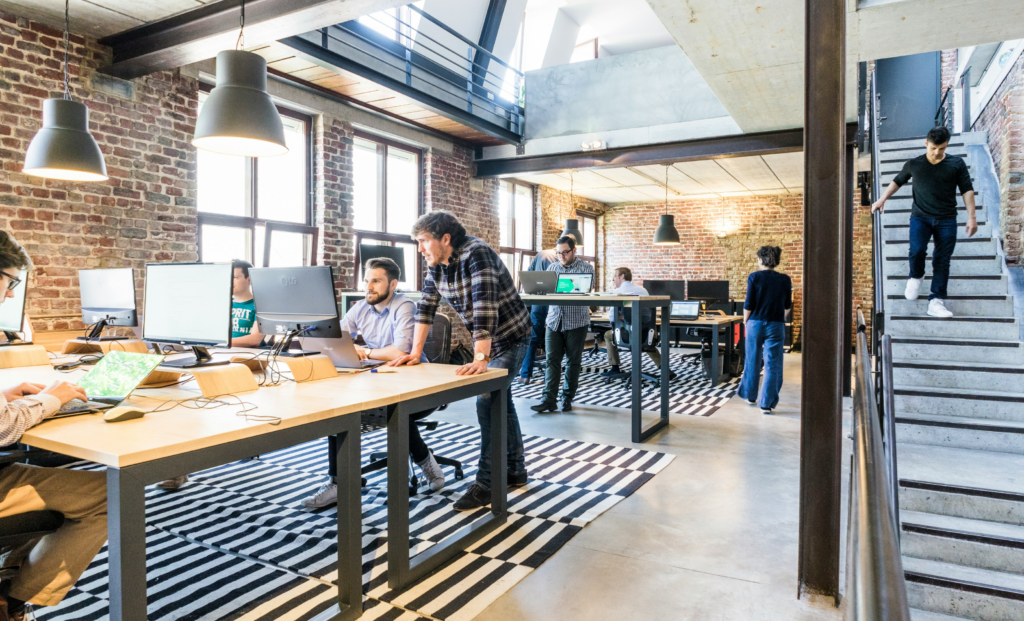
Future-proofing commercial buildings is not about predicting exactly how businesses will operate in ten or twenty years. It is about creating buildings with enough flexibility, efficiency and resilience to respond when those needs change.
At GT Group, we believe successful commercial property development should consider the entire life of a building. The decisions made during design and construction should support not only the first businesses occupying the space, but those that may use it many years from now.
Flexible spaces give businesses room to change
One of the most important characteristics of a future-ready commercial building is flexibility.
A business may need an open-plan environment today and more private meeting spaces tomorrow. Teams may expand or contract. Departments may need to move closer together. New ways of working may require different combinations of collaborative, individual and shared spaces.
Commercial buildings that can accommodate these changes without extensive structural work offer greater long-term flexibility to tenants and owners.
This is why office space planning should look beyond immediate occupancy. Structural layouts, services, partitions and circulation should all be considered with potential future configurations in mind.
A flexible office is not simply one with movable furniture. It is a workspace that can evolve without requiring the business to start again every time its requirements change.
Infrastructure needs to anticipate tomorrow’s technology
Technology has transformed commercial buildings, and that evolution is unlikely to slow down.
Reliable connectivity, electrical capacity, access control, security systems, building management technology and data infrastructure are already fundamental to many modern workplaces.
Future-proof commercial buildings in Malta should therefore consider how these systems can be maintained, upgraded and expanded.
This does not mean installing every new technology available. Technology moves too quickly for that to be practical.
Instead, smart building design should provide the infrastructure that allows new systems to be introduced without unnecessary disruption. Accessible service routes, sufficient capacity and carefully coordinated installations can make future upgrades considerably easier.
The smartest building is not necessarily the one with the most technology. It is often the one that can adapt when better technology arrives.
Energy efficiency is a long-term business consideration
Energy-efficient commercial buildings are becoming increasingly important for both environmental and operational reasons.
Cooling, lighting, ventilation and equipment can represent significant ongoing costs within commercial property. Improving building performance can therefore reduce resource consumption while contributing to more predictable operating costs.
Building orientation, insulation, glazing, shading, efficient lighting and modern cooling systems can all influence energy performance.
The important point is that energy efficiency should be considered as part of the overall building strategy rather than treated as an individual feature.
For commercial property owners in Malta, investing in efficient building systems can also help ensure properties remain relevant as expectations around sustainability and building performance continue to develop.
Maintenance should be considered during design
One of the clearest lessons from managing commercial buildings is that design decisions continue to have consequences long after construction finishes.
A system may perform perfectly, but what happens when it needs servicing?
Can technicians reach it easily? Can components be replaced without disrupting tenants? Have materials been selected with their long-term maintenance requirements in mind?
Future-proofing means asking these questions before the building is complete.
At GT Group, our experience across construction, commercial property management and building maintenance provides a useful perspective on this. Understanding what happens to a building after handover can inform better decisions during design and construction.
A building that is easier to maintain is generally easier to keep performing well.
Modern workspaces need to support people too
Future-proofing is not only about technology and building systems.
The businesses of tomorrow will still depend on people, which means commercial buildings need to provide environments where people can work comfortably and effectively.
Natural light, ventilation, acoustics, accessibility and well-planned shared spaces all contribute to the quality of a modern workspace.
As working patterns evolve, offices may increasingly need to accommodate different types of activity throughout the day. Employees may move between focused work, meetings, collaboration and informal conversations rather than remaining at one workstation.
Commercial office space that provides this variety is better positioned to respond to changing workplace expectations.
Adaptability can protect commercial property value
A building’s long-term value is closely connected to its continued relevance.
Commercial properties that are difficult to adapt can gradually become less attractive as tenant expectations and business requirements change. Owners may then face significant refurbishment costs simply to bring the building back in line with the market.
By contrast, adaptable commercial buildings can respond more efficiently.
Flexible layouts, accessible infrastructure, efficient building systems and consistent property management can help extend the useful life of a commercial property.
For owners and developers, future-proofing should therefore be viewed as part of protecting long-term commercial property value rather than simply adding features during construction.
Property management keeps future-ready buildings performing
Even the best-designed commercial building requires active management.
Building systems need servicing. Technology needs updating. Shared areas need maintaining. Tenant requirements change.
Professional commercial property management helps identify these changes and respond before they develop into larger operational problems.
It also provides valuable information about how a building is actually being used. Patterns in maintenance, occupancy and tenant requirements can inform future improvements and investment decisions.
A future-ready building is not one that never changes. It is one that is managed well enough to keep changing.
Building for what comes next
There is no way to know exactly what tomorrow’s businesses will require from their office space.
What we can do is avoid designing commercial buildings around a single moment in time.
At GT Group, our approach to commercial property in Malta considers design, construction, operation and maintenance as connected parts of the same process. A decision made during development can influence how efficiently a property operates years later.
Future-proofing commercial buildings therefore comes down to thoughtful decisions: flexible spaces, adaptable infrastructure, energy-efficient systems, maintainable design and professional long-term management.
The goal is not to predict the future.
It is to build commercial environments ready to respond when the future arrives.