
Offices today are about more than desks and data cables. The best workspaces support productivity, reduce stress, and make teams feel good about where they spend their time. One of the simplest and most effective ways to do this is through greenery. Indoor plants can transform a space not just visually, but emotionally and environmentally too.
At GT Group, we believe in functional spaces that work for the people inside them. A few well-placed plants can enhance the atmosphere, improve air quality, and even make tenants more likely to stick around long term. But not every plant works in every office. And poor plant maintenance can send the wrong message.
Here’s a guide to choosing the right indoor plants for your building and how to keep them thriving with minimal hassle.
Why Plants Matter in Commercial Spaces
Plants are more than decorative. Research consistently shows that greenery in office environments improves mental wellbeing, reduces fatigue, and even boosts productivity. In large commercial buildings, plants can help soften the hard edges of modern architecture, improve acoustics, and enhance the perceived value of common areas.
A carefully selected plant strategy can elevate the entire experience of a space. Whether it is a leafy focal point in the reception or a row of desk plants in an open-plan office, plants make interiors feel calmer, fresher, and more complete.
Low-Maintenance Winners for Busy Offices
If you are managing a commercial property, maintenance is a key consideration. You want plants that look good, survive irregular watering, and do not require constant repositioning. These are some of the best choices for commercial buildings in Malta:
Option #1: Snake Plant (Sansevieria)
Known for its upright leaves and architectural shape, the snake plant is virtually indestructible. It can thrive in low light and needs watering only every couple of weeks. It also helps filter indoor air pollutants.
Option #2: ZZ Plant (Zamioculcas zamiifolia)
Ideal for offices with little natural light, the ZZ plant is drought-tolerant and requires minimal attention. Its glossy leaves make it an attractive addition to any reception area or hallway.
Option #3: Pothos (Epipremnum aureum)
This trailing plant is perfect for shelves and partitions. It grows quickly, adapts to various lighting conditions, and can be trimmed easily to manage its shape.
Option #4: Peace Lily (Spathiphyllum)
If you want something a bit more elegant, the peace lily delivers. It prefers indirect light and gives off white blooms. It also acts as a natural air purifier, though it does need regular watering.
Option #5: Rubber Plant (Ficus elastica)
This larger option works well in lobbies or meeting rooms. It needs bright, indirect light and moderate watering. The dark green leaves add a touch of formality and structure.
Where to Place Office Plants
In any office environment, the placement of indoor plants is just as important as the plants themselves. A healthy plant placed in the wrong spot will quickly begin to struggle, which is why understanding light exposure, airflow, and foot traffic is essential before introducing greenery into a commercial space. Start by assessing how natural light moves through the building. Reception areas, for instance, often benefit from larger statement plants that convey professionalism and warmth at first glance. Options like rubber plants or snake plants not only make a strong visual impact but are also well suited to structured, high-visibility environments.
In meeting rooms, plants play a more subtle role. Calming varieties such as peace lilies can help soften the space and contribute to a more focused, balanced atmosphere during discussions or presentations. Open-plan offices present a different opportunity. These spaces benefit from smaller plants that can be integrated into workstations or shelving, helping to reduce visual monotony and support a more comfortable, human-centred layout. Pothos or ZZ plants work well here due to their low maintenance and ability to thrive under artificial lighting.
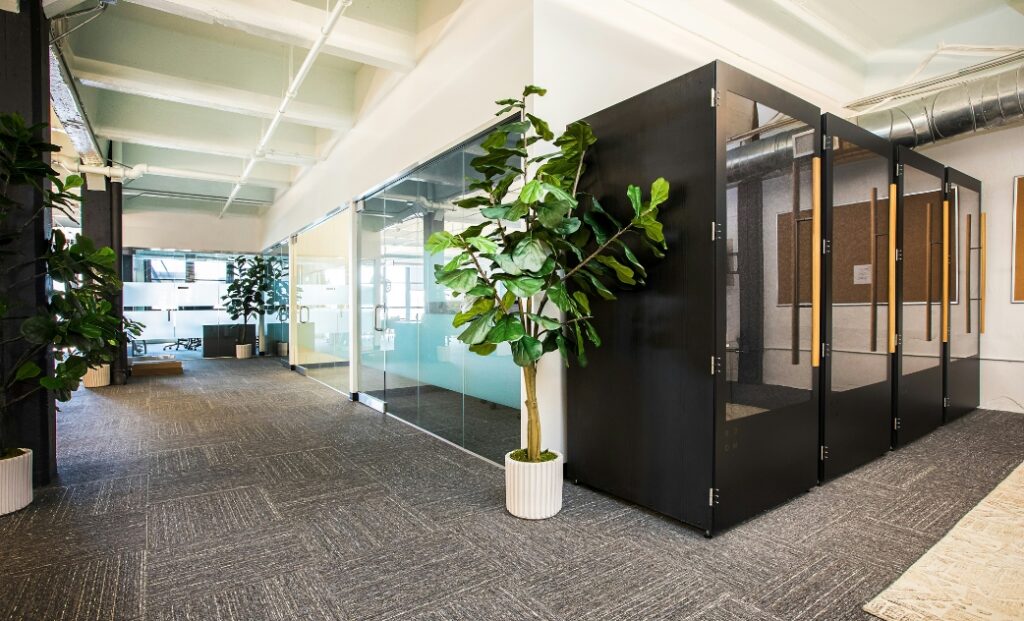
Even transitional areas like corridors and corners can benefit from the right plant selection. Ferns or compact palms can introduce texture and movement to otherwise static parts of the office, provided there is sufficient light. Ultimately, the most effective greenery is thoughtfully placed not just for aesthetics, but to align with the way the space functions. By matching plant types to the physical and functional characteristics of each zone, office spaces become more inviting, more cohesive, and more conducive to everyday productivity.
Plant Maintenance Without the Fuss
In commercial buildings, consistency is often the hardest part of maintaining indoor plants. Even the most resilient varieties will begin to suffer without a clear and reliable care plan. To keep plants looking their best, start by grouping them according to their water needs. This makes routine care far more efficient and reduces the risk of overwatering or neglect. Assigning responsibility is equally important. Whether it falls under a facility manager, cleaning crew, or external landscaping service, there should always be someone tasked with monitoring plant health on a weekly basis.
To further reduce maintenance, many buildings are turning to self-watering pots. These containers regulate moisture levels and help prevent common issues like root rot or dry soil, especially in offices where care routines can vary. Light levels are another key factor. Create a basic light map of the space to understand which areas receive natural sun, filtered light, or none at all. Position plants accordingly to help them thrive without needing to be moved around constantly.
Finally, it pays to be realistic. Not every plant will adapt to every corner of a commercial property. Keep a few extra pots on hand so you can quickly swap out struggling greenery with fresh replacements. With the right planning and minimal intervention, maintaining indoor plants becomes a manageable part of keeping your office environment fresh, professional, and welcoming year-round.
What to Avoid When Introducing Plants into Office Spaces
While indoor plants can elevate the atmosphere of any commercial space, poor planning often leads to unnecessary upkeep and underwhelming results. One of the most common pitfalls is selecting high-maintenance species like orchids or bonsai trees without putting a clear care system in place. These varieties may look appealing, but they require consistent, expert attention and are rarely suited to busy office environments.
Another frequent issue is mismatched lighting. Placing shade-loving plants in full sun can lead to scorched leaves and rapid decline, while low-light corners can easily overwhelm plants that need a steady dose of brightness. It is also critical to establish clear responsibilities when it comes to watering. Without a designated caretaker, plants can suffer from overwatering or neglect, both of which can shorten their lifespan and compromise their appearance.
Soil is another detail that often goes overlooked. Using containers without proper drainage or relying on the wrong type of soil can lead to root rot and other preventable problems. Lastly, pest control is a key factor, especially in warmer seasons. Ignoring early signs of infestation can lead to larger issues that impact not only the plants themselves but also the surrounding work environment.
Creating a green office should never become a burden. By avoiding these common mistakes and treating indoor plant care as a thoughtful part of the overall office design strategy, businesses can enjoy all the benefits of biophilic design without the hassle. A smart plant strategy supports wellbeing, adds value to the workspace, and aligns seamlessly with long-term commercial property goals.
Plants as Part of Office Strategy
At GT Group, we see indoor greenery not just as décor, but as part of the tenant experience. Plants help express care, create more human environments, and make people want to spend time in a space. When combined with good lighting, sound design, and thoughtful layouts, greenery completes the picture.
If you manage a commercial building, adding plants is a relatively small investment with outsized returns. It shows tenants that every detail matters and that the workspace has been designed with real people in mind.
Bringing It All Together
The best office plants are those that enhance the space, not burden it. With the right selection, smart placement, and a simple maintenance plan, your building can become greener, fresher, and more appealing for everyone who steps inside.
Whether you are looking to upgrade your reception area or refresh your common spaces, consider what a few well-chosen plants can do. In a market where experience drives retention, every small touch counts.