
Traditional Maltese homes were built to last. Their limestone structures, thick walls, and climate-responsive design have allowed many of these properties to endure for generations. But while the buildings may be old, the construction industry has changed dramatically, and so have the expectations placed on homes.
Today’s renovation is no longer limited to patching and repair. With modern knowledge, improved materials, and specialist craftsmen, traditional Maltese properties can be strengthened, upgraded, modernised, and future-proofed. All while retaining the architectural character that defines them.
And increasingly, renovation must also respond to a newer reality: climate change. Rising temperatures, unpredictable rainfall, stronger storms, higher humidity, and environmental stress all place additional demands on older buildings. Renovation today must protect not just heritage, but also resilience.
Old buildings, modern solutions
Many traditional homes were built at a time when construction relied on manual craftsmanship and locally available materials. These buildings were deeply adapted to Malta’s climate and lifestyle of the past but contemporary living requires greater efficiency, comfort, and services.
Fortunately, renovation methods have advanced enormously. Modern restoration and construction specialists can now apply structural reinforcement techniques suited to historic buildings, breathable lime-based mortars and finishes, advanced waterproofing and damp-management systems. With the right approach, old buildings can meet modern standards without losing their identity.
Understanding the structure before renovation begins
Traditional Maltese homes depend on thick limestone walls, load-bearing masonry, limited structural openings, and simple but effective construction logic. Successful renovation begins by understanding how the building works and how interventions might affect it.
Modern renovation focuses on working with the structure, not forcing unsuitable solutions onto it. With correct planning, structural integrity can be preserved while performance and comfort are enhanced.
Breathability, moisture, and rising humidity
One of the biggest issues in older properties is damp and this is becoming more relevant as climate change increases humidity and irregular rainfall patterns.
Traditional buildings were designed to breathe. When non-breathable cement-based materials are used incorrectly, they trap moisture and accelerate deterioration.
Modern renovation now offers far better solutions, including breathable plasters and renders suited to limestone, compatible lime-based mortars or moisture-management strategies based on building physics.
When correct materials and techniques are used, older buildings can be stabilised and protected for decades to come, even under changing climate conditions.
Retaining natural climate performance and upgrading it
Traditional Maltese homes often perform exceptionally well in hot weather thanks to thick walls, high ceilings, courtyards, and ventilation paths. Renovation should protect these passive design advantages.
However, climate change is increasing the intensity and duration of heat, making thermal comfort more challenging. Renovation therefore provides an opportunity to enhance performance through sensitive upgrades such as discreet insulation solutions that remain breathable, improved roof waterproofing and heat protection and carefully designed glazing and shading strategies.
These measures help reduce overheating and improve energy efficiency without compromising the building’s character.
Adapting layouts for modern living
Homes were built to evolve over time, and renovation allows layouts to be refined for contemporary needs. Modern living often requires clearer zoning, better circulation, additional bathrooms, and more functional living areas.
Thoughtful design makes it possible to introduce new layouts that suit your way of living and can also provide stronger indoor–outdoor connections. All while retaining original proportions and architectural logic.
Integrating modern services with precision
Electrical systems, plumbing, heating/cooling, and data infrastructure are now essential and modern building practices allow them to be integrated far more discreetly than in the past.
A careful approach enables services to sit quietly within the building by routing systems without damaging stonework, minimising disruption to heritage finishes, using concealed solutions where possible and improving comfort without visual intrusion.
The result is a home that functions as a modern residence while remaining authentic.
Craftsmanship makes the difference
Heritage buildings rely on skilled craftsmanship and the success of renovation often depends on the quality of the people involved as much as the design.
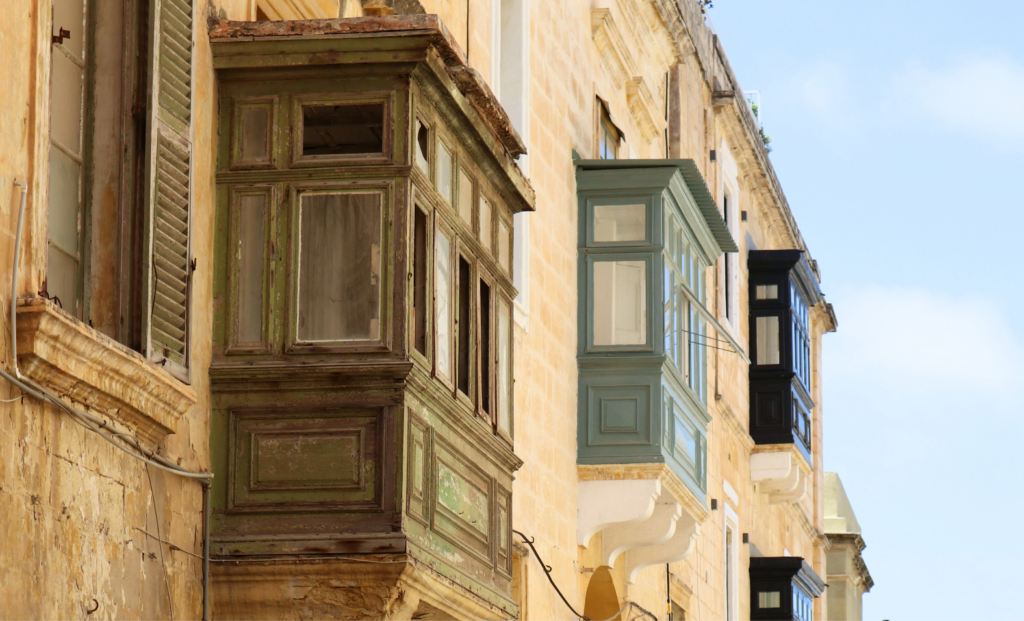
Traditional features such as timber apertures, stone balconies, tiled floors, and architectural stonework can often be repaired and restored rather than replaced. Preserving these details maintains continuity and supports long-term value.
Where new materials are introduced, selecting finishes that respect the scale, texture, and palette of the original helps balance old and new without losing architectural cohesion.
Renovation as a long-term investment and a resilience strategy
Renovating a traditional Maltese property is not only an investment in heritage and aesthetics. It is also an investment in durability, resilience, and future performance.
As climate conditions change, older buildings must be strengthened against extreme heat and prolonged hot seasons, increased humidity and condensation risk, intense rainfall and stormwater run-off and material decay accelerated by moisture cycles.
Renovation that includes climate-aware upgrades helps protect both the building and the people living in it, ensuring the home remains comfortable, efficient, and structurally sound for future generations.
Building forward while respecting the past
Traditional Maltese homes reflect generations of practical design and enduring construction. While their foundations are historic, modern renovation offers the tools to bring them confidently into today’s world.
With the right techniques, materials, and craftsmen, and with climate resilience now part of responsible planning, renovation becomes a bridge between past and present, ensuring Malta’s architectural heritage remains preserved, functional, and truly livable.