
Office space plays a bigger role in business performance than many organisations realise. It is easy to think of an office simply as the place where work happens, but the reality is more complex. The workplace influences productivity, communication, employee wellbeing, client perception, and the ability of a business to adapt over time.
Importantly, this does not mean businesses should constantly be looking to relocate. In many cases, the solution is not a different office at all. Often, it is a matter of understanding how the space is being used and whether it continues to support the way the organisation operates.
At GT Group, we view office space as a long term business asset. Whether it involves workspace planning, layout adjustments, or evaluating future requirements, the objective is always the same: creating an environment that supports growth rather than restricting it.
Here are some signs that an office space may no longer be serving a business as effectively as it should.
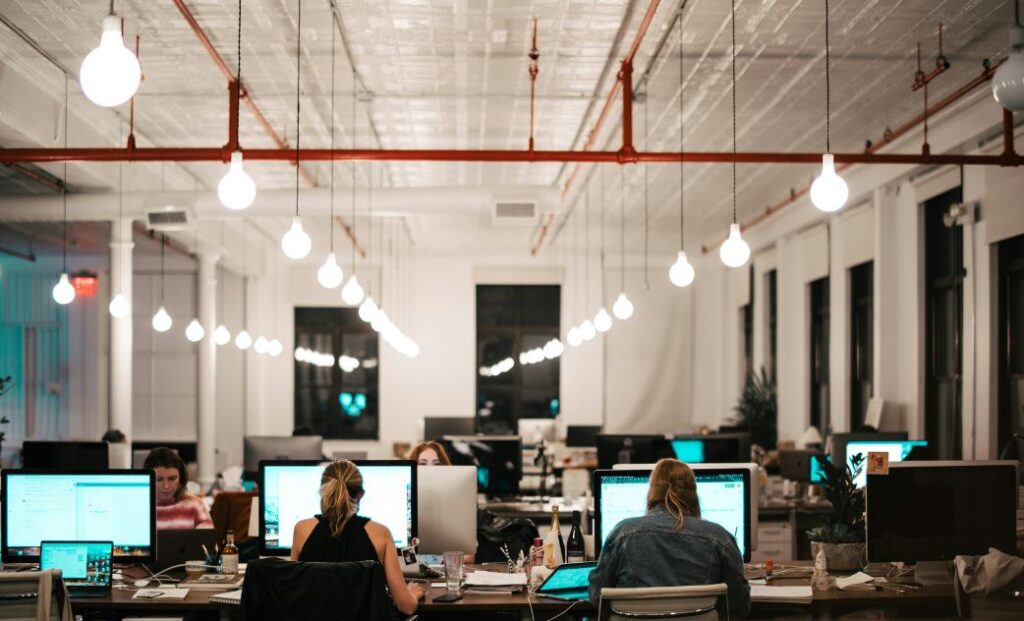
The layout no longer reflects how your team works
Businesses evolve. Teams grow, responsibilities change, and new ways of working emerge. However, office layouts often remain unchanged for years.
A workspace that functioned perfectly five years ago may no longer align with current needs. Departments may have expanded, collaboration may have increased, or hybrid working patterns may have changed how employees use the office.
This does not necessarily indicate that the office itself is the problem. Often, the challenge lies in the layout rather than the location. Reconfiguring meeting areas, creating flexible workspaces, or improving circulation can significantly enhance how a team operates without requiring a move.
Good office planning in Malta is not about maximising every square metre. It is about ensuring the space supports the people using it.
Meeting rooms are constantly unavailable
One of the most common workplace frustrations is the inability to find suitable meeting space.
When meeting rooms are permanently booked, informal discussions begin taking place in circulation areas, break rooms, or open workspaces. Over time, this can affect productivity and create unnecessary distractions.
A shortage of meeting facilities does not always mean a business has outgrown its office. Sometimes it highlights the need for better space planning or a more flexible allocation of existing areas.
However, it is an important signal that workplace demands may have changed and should be reviewed.
Infrastructure is struggling to keep pace
Modern businesses rely heavily on infrastructure. Reliable connectivity, adequate power distribution, effective climate control, and adaptable technology systems all play a critical role in day to day operations.
When employees regularly encounter connectivity issues, insufficient power points, inadequate cooling, or technology limitations, productivity suffers.
These problems are often viewed as minor inconveniences, but they can have a significant cumulative impact over time.
A well-managed commercial office in Malta should support modern business requirements without creating unnecessary obstacles for the people using it.
Growth is creating pressure on the space
Growth is a positive challenge, but it still requires planning.
As teams expand, businesses often find themselves gradually adapting workstations, repurposing rooms, and finding temporary solutions to accommodate additional staff. While this can work in the short term, it may eventually affect efficiency and workplace experience.
The key question is not whether the office feels full. It is whether the space continues to function effectively.
Many businesses successfully grow within the same office environment through better workspace planning and more efficient use of available space. The goal is to ensure growth remains supported rather than constrained.
Workflow feels more complicated than it should
Sometimes the warning signs are less obvious.
Employees spend more time moving between departments. Teams that need frequent interaction are located far apart. Storage areas are difficult to access. Everyday processes involve unnecessary steps.
These challenges may appear minor individually, but together they can reduce efficiency across the organisation.
Office design is not only about aesthetics. It is about creating an environment that supports natural workflows and removes friction from everyday operations.
Businesses that regularly review how people move through and use their workspace often identify opportunities for improvement that have little to do with square metres and everything to do with planning.
Employee experience is being affected
The quality of the workplace has a direct influence on employee satisfaction.
Factors such as natural light, ventilation, acoustics, comfort, and access to amenities all contribute to the overall working environment. While these elements may not always appear in financial reports, they affect how employees experience the office every day.
A well-designed office space helps attract talent, support retention, and create a positive workplace culture.
At GT Group, we believe that commercial property should support the people inside it, not simply provide a place to work.
The office no longer reflects the business
As organisations evolve, their physical environment should evolve alongside them.
A company that has grown significantly may find that its office no longer reflects its professionalism, capabilities, or ambitions. This can influence both employee perception and the experience of visiting clients.
The solution is not always relocation. Sometimes it involves refurbishment, layout optimisation, or improvements to the overall workspace environment.
The important thing is recognising that office space is part of the business itself, not separate from it.
Supporting growth through better workspace planning
The signs discussed above should not be viewed as reasons to leave an office. Instead, they should be viewed as opportunities to assess whether the workspace continues to support business objectives effectively.
Many workplace challenges can be addressed through thoughtful planning, improved layouts, upgraded infrastructure, and proactive property management. In other cases, businesses may choose to explore additional space or different configurations as part of their long term growth strategy.
At GT Group, we understand that office space is about more than square metres. It is about creating commercial environments that support productivity, flexibility, and long term business success.
The most effective office spaces are not necessarily the largest. They are the ones that continue to evolve alongside the businesses that occupy them.